

Reflections on Care, Health and Community
April 20, 2026 – In early 2023, Yueting (Alexandra) Lu was a Leadership Resident at our Boeung Trabaek (BT) dormitory. This past fall she returned to Cambodia as a Fulbright Fellow, researching community-based care models in collaboration with local organizations. Yueting shared with us her reflections on returning to Cambodia, and the connections to Harpswell she sees in her current work:
Before modern healthcare’s centralization in clinics and hospitals, the concepts of health and well-being were shaped within communities and by the proximal space between people. Nearly three years after my time as a Leadership Resident (LR) in Harpswell’s BT dorm, I find myself back in Phnom Penh as a Fulbright Fellow, investigating aging and community health in medically low-resource settings. In many ways, my decision to return to Cambodia traces back to my time with Harpswell. As an LR, I experienced the restorative impacts of community and the resulting inclination to care for each other. This continues to shape my work today through how I think about aging populations and the varied social systems that surround it.
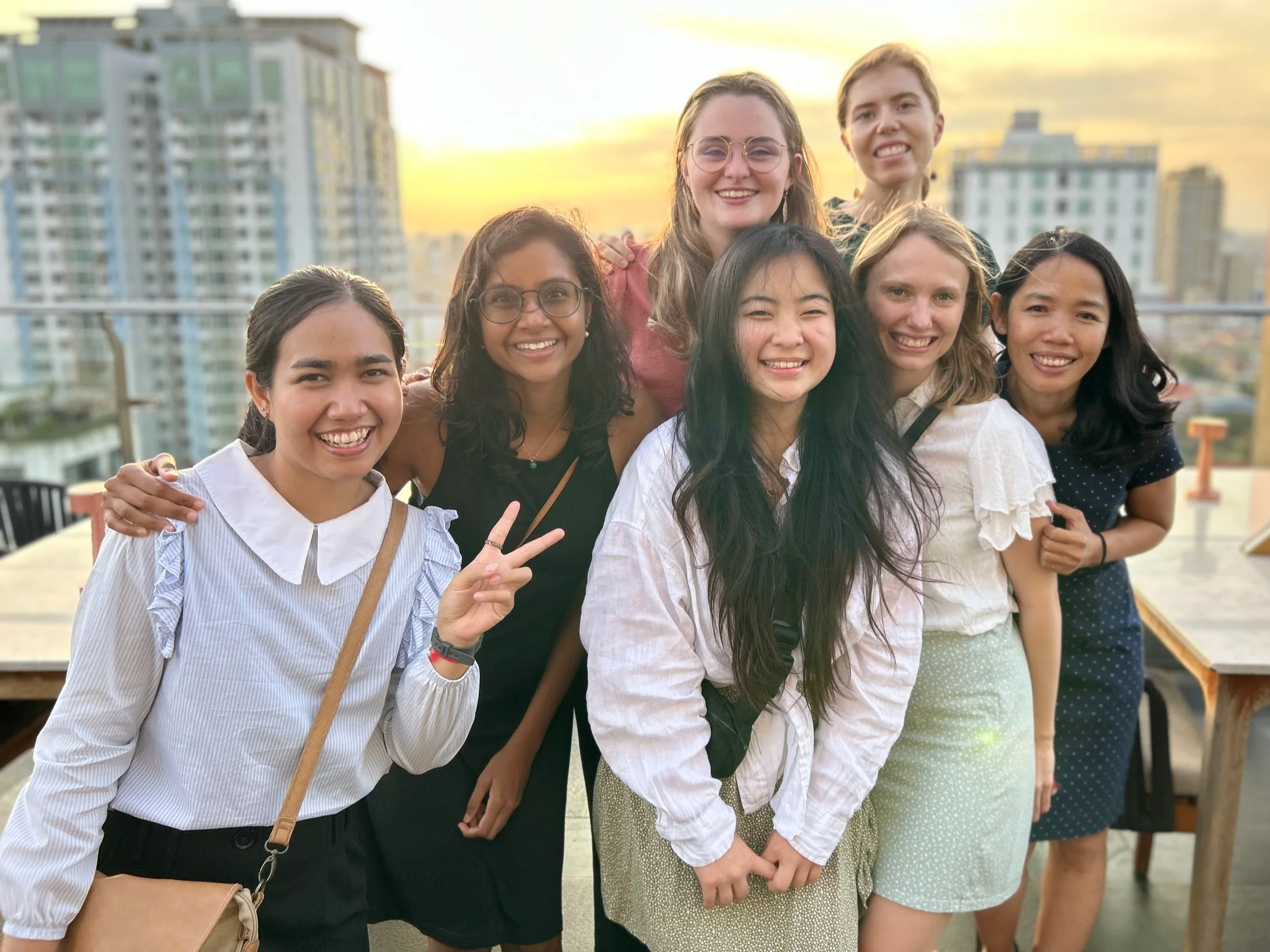
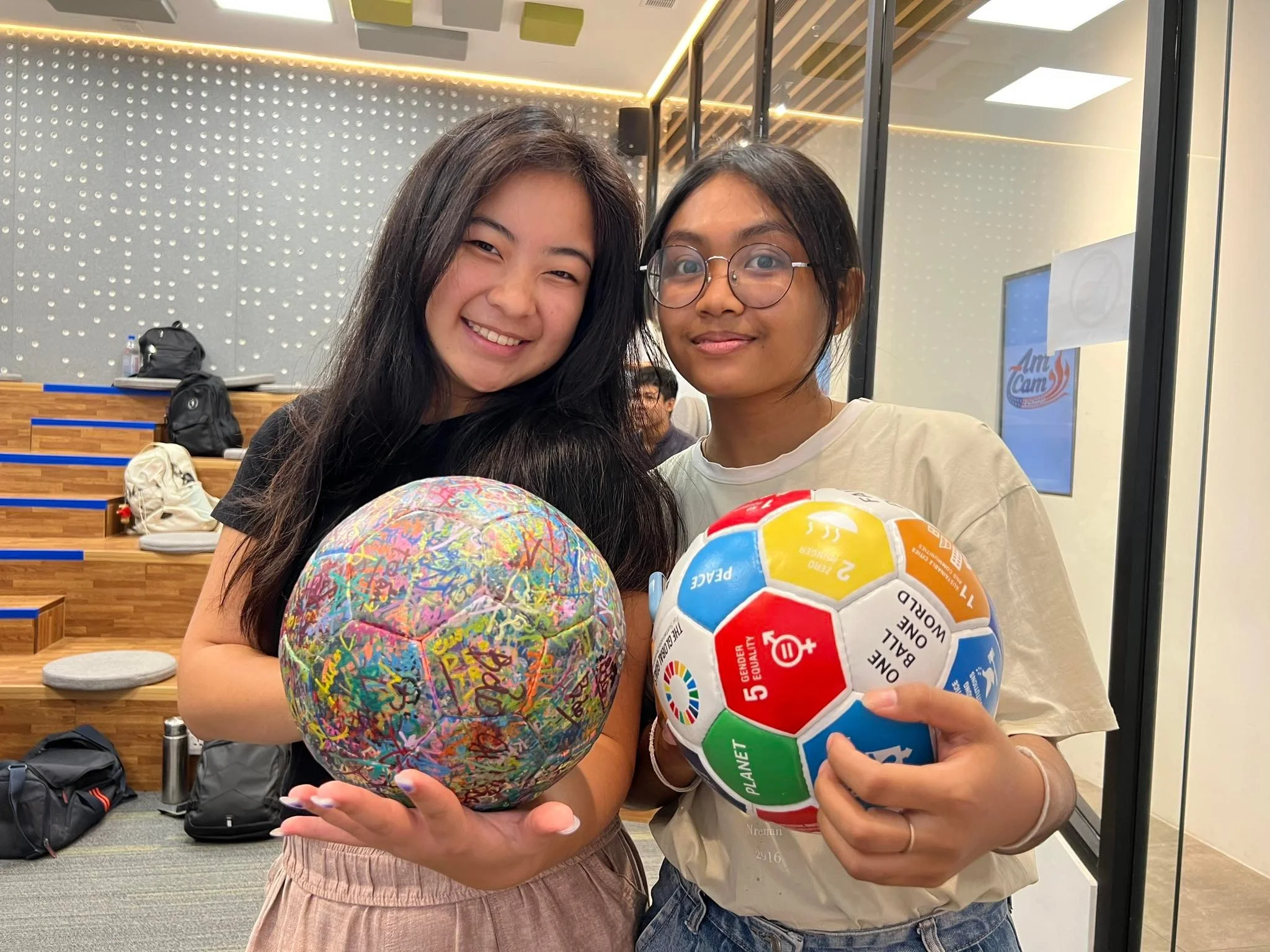
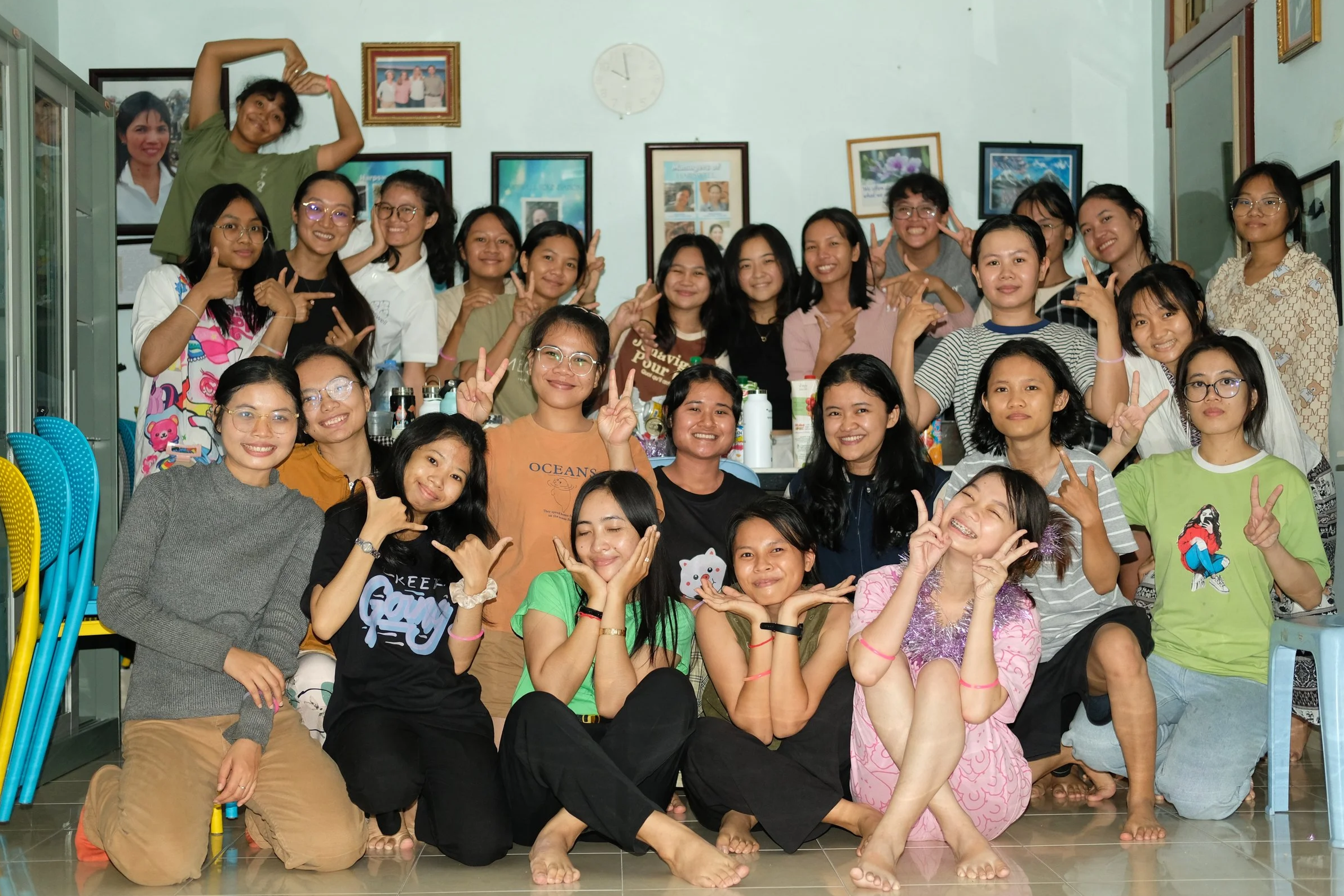
Left to right: Yueting with her LR cohort, at a workshop with a student, and BT students.
Shortly after I began my time as an LR, Harpswell's Class of 2027 arrived, a small group of shy and reserved girls. Over the following months, through movie nights, coconut ice cream, face masks, and late-night conversations, I watched them open up. In class, my students’ lists of questions became longer each week, a promising sign of their growing conviction and self-assurance. We often had conversations about parents and grandparents in faraway, rural hometowns, examining the complex feelings of obligation as students pursued their education in the city. These conversations shaped our relationships with each other and the desire to support one another more organically. What sociologists term “social capital”—the trust, reciprocity, and networks that enable communities to function—I saw unfold in real time within the dorm.
Harpswell is, by design, a place for deep human development. Beyond the classroom, students are growing into themselves within a community that encourages a holistic contemplation and evolution of their dreams and goals.
To care for someone is never a purely individualistic act. At Harpswell, I witnessed strong social support networks transforming one’s sense of belonging and confidence. This insight directly informs my Fulbright work. Today, I am investigating how existing community structures can support the well-being of Cambodia’s aging people, particularly those in rural areas where access to healthcare is limited by geography, cost and literacy.
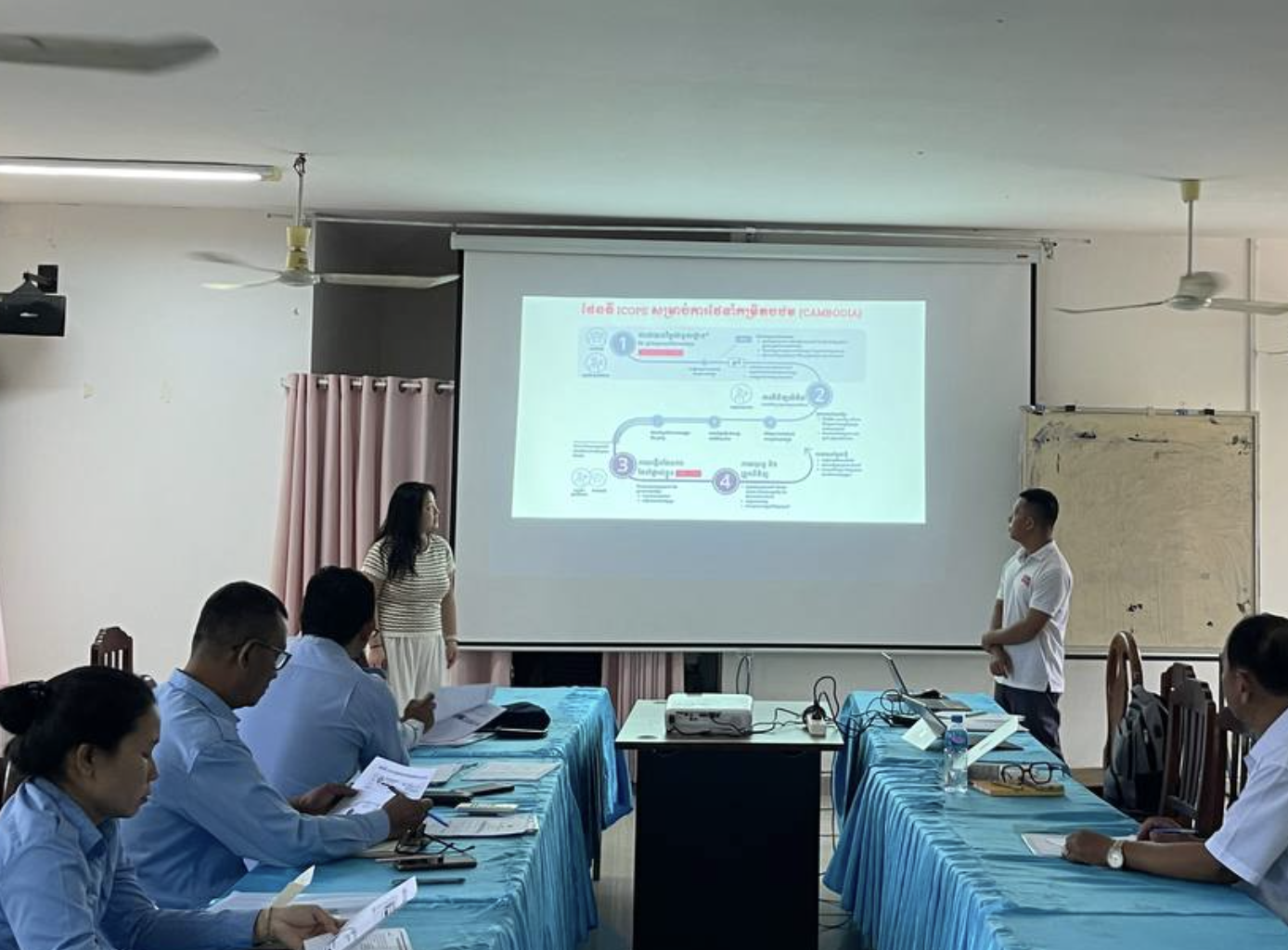
Yueting presenting on her current research.
In collaboration with the World Health Organization and Cambodia’s National Institute of Public Health, I am implementing and evaluating community-based care models that rely on local volunteers and social networks. This structure allows us to harness and strengthen the community relationships already prevalent in much of rural Cambodia while mitigating the shortage of medical personnel and resources in these regions. Though the contexts differ, I notice a shared idea that communities sustain individuals over time.
“Community” is often invoked as a universal good. Paradoxically, it is rarely realized with the depth and intentionality that define spaces like Harpswell. Rarer yet is the intentional cultivation of the trust and connectivity that makes such communities transformative. In my current work, I frequently return to lessons from the dorm. I see parallels between the students I once lived alongside and the communities I now work with. There are shared feelings of uncertainty and vulnerability, and I’ve learned that paying attention to someone’s fears, routines, or even their favorite foods can deepen both the support I provide and my understanding of their needs. Just as learning a student’s favorite K-pop songs or movies helped me build relationships in the dorm, these details shape how I approach community health work.
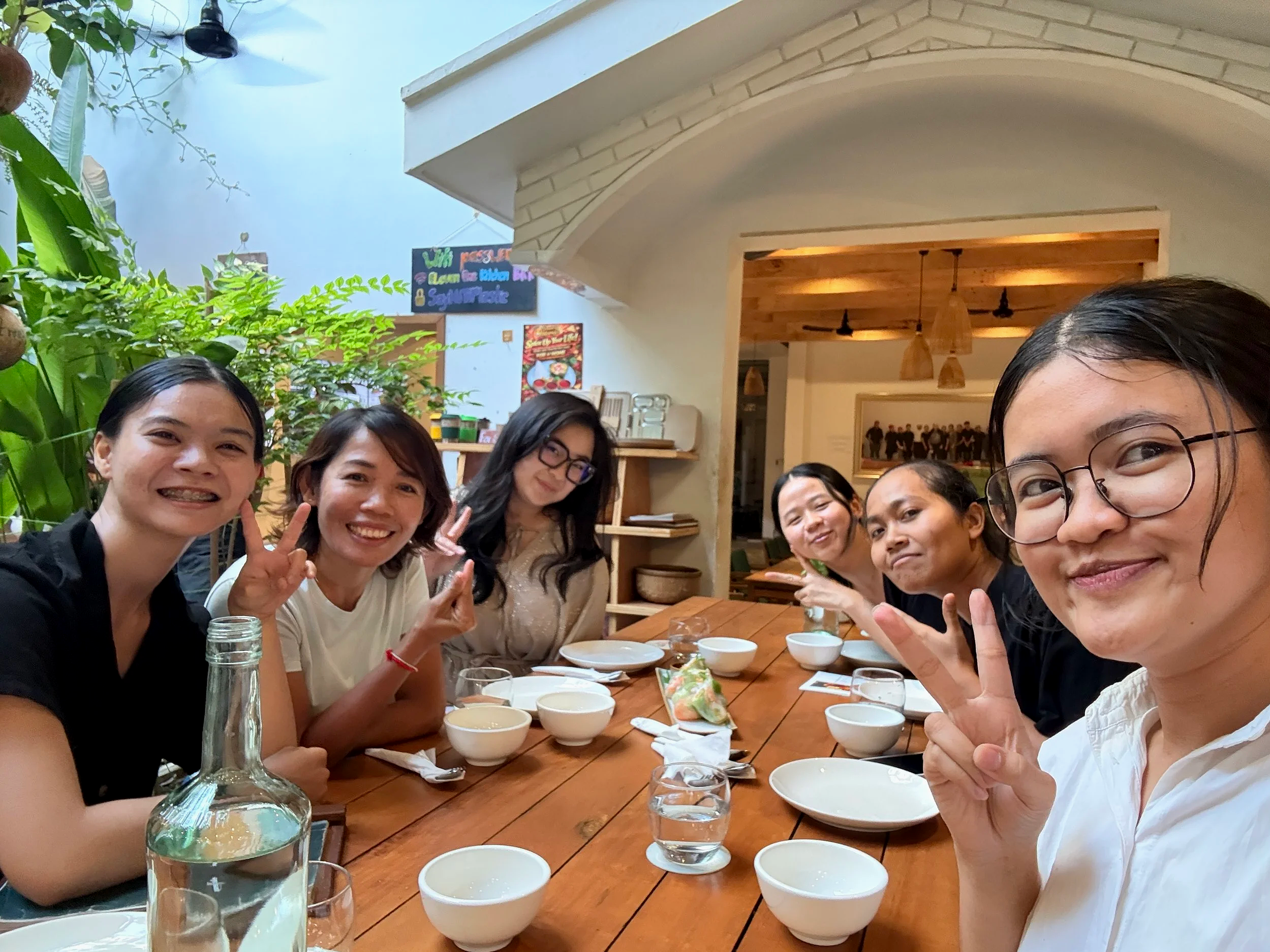
Yueting reuniting with Harpswell alumnae.
Returning to Cambodia has also allowed me to reconnect with Harpswell students and alumnae. Students I once knew as quiet first-years are now preparing to graduate as confident, self-assured women. Seeing who the students have become and how they choose to interact with the world has reinforced for me how this kind of community can be inherently regenerative. The students who once arrived uncertain are ever-growing into sources of support for those who follow. In my current work, I witness similar patterns in rural communities that rely on intergenerational support and knowledge.
Looking forward, Cambodia and Harpswell will continue to shape my path in medicine. As I reflect upon my time here, I recognize that progress and community building do not come from grand, singular solutions, but rather the steady and often gradual accumulation of trust and understanding. At a time when education for women continues to be contested, healthcare systems strain under fluctuating pressures, and the world faces rapid change, there is little more powerful than the development of communities strong enough to adapt, giving and receiving from the world around them.
